Hystricidae
Rodentia
Mammalia
66–112 days
One birth a year
No specific captive breeding programs have been identified for this species.
It feeds primarily on roots, tubers, bark, fallen fruit, and agricultural crops. It occasionally consumes insects, small vertebrates, and carrion. It also gnaws on bones to obtain calcium and sharpen its incisors.
In the wild: Up to 20 years. In captivity: Up to 28 years
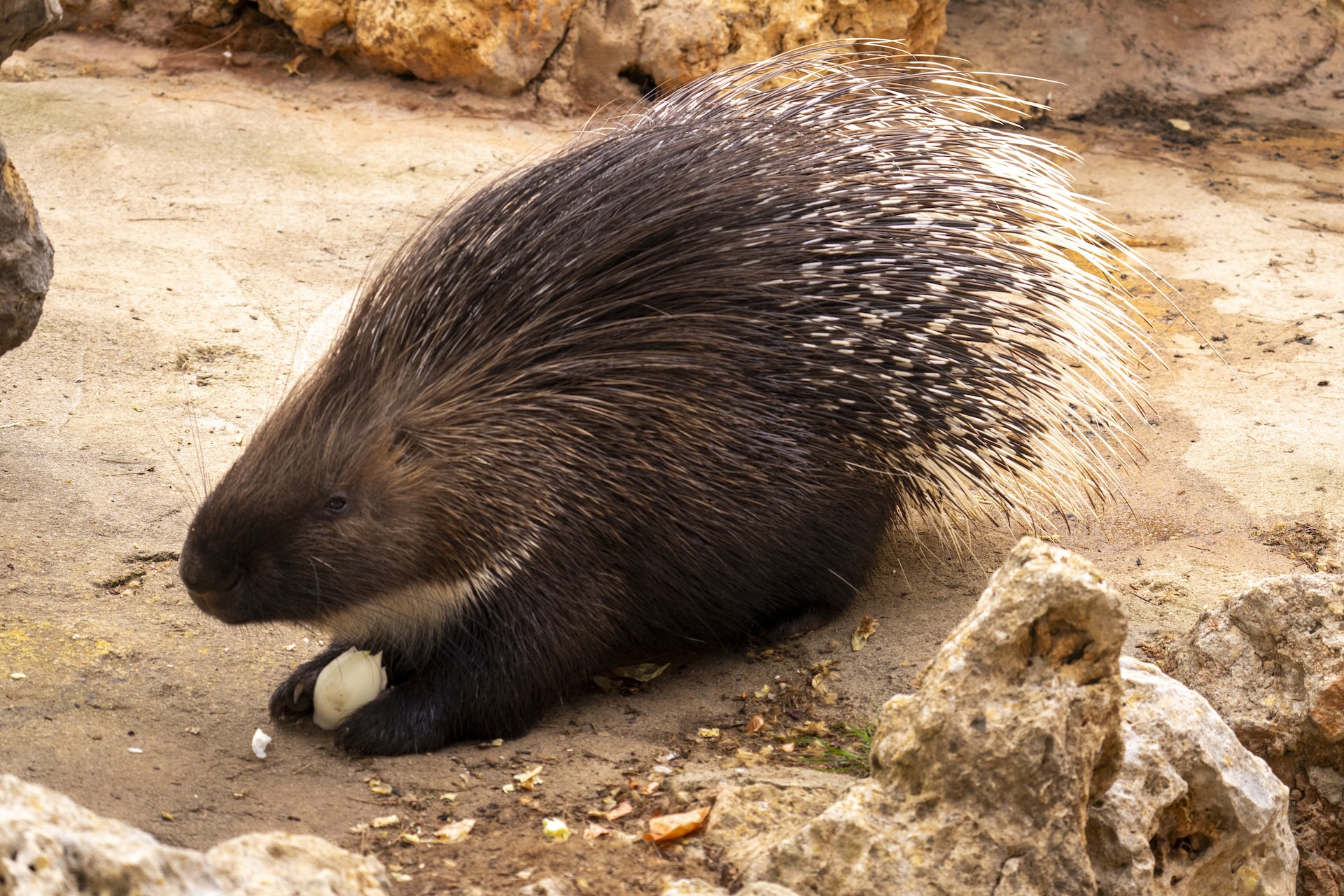
The common porcupine (Hystrix cristata) is the largest rodent in Europe and one of the largest in Africa. It is distinguished by its compact body and its covering of stiff, black and white spines, which can reach more than 30 cm in length. These spines are a highly effective defensive adaptation. Unlike hedgehogs, its spines are not attached to muscles, but can be raised or released if the animal is threatened. It has a large head with developed incisors, small eyes, and short legs with strong nails. It is a plantigrade animal, walking on the sole of its foot. Its diet includes roots, tubers, bark, and fruits, although it also gnaws bones to obtain calcium. It lives in dug burrows or natural caves, where it remains hidden during the day. Its anatomy and behavior allow it to survive in both humid and arid environments.
The common porcupine is nocturnal, solitary, or lives in monogamous pairs, although it can also form small family groups. During the day, it remains hidden in burrows or rocky crevices, which it can excavate itself. It is strictly terrestrial, although it can swim if necessary. Its nocturnal movements are focused on searching for food, and it can travel several kilometers in a single night. When threatened, it emits a rattling sound with the hollow quills of its tail, erects its spines, and ultimately charges backward to plunge its quills into the attacker. This defensive behavior has been documented even against large carnivores. It displays territorial loyalty and uses urine marking to delimit its space. Although it has poor eyesight, it navigates effectively by smell and hearing.
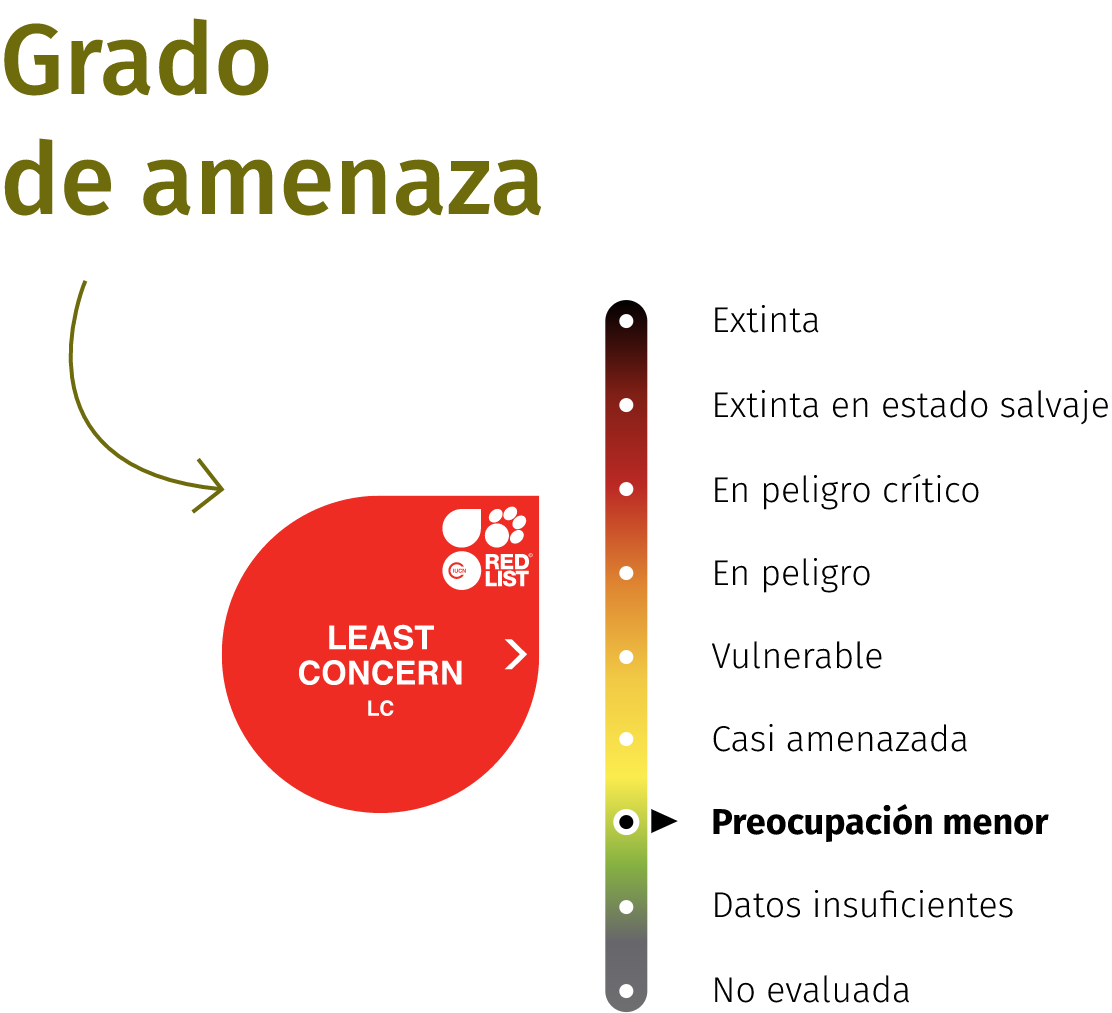
The common porcupine is classified as “Least Concern” (LC) by the IUCN due to its wide distribution and tolerance to modified habitats. However, it faces localized threats, especially in North Africa, where it is hunted for its meat and its spines. In Europe, specifically in Italy, it is protected by national laws and EU directives, although cases of persecution in rural areas persist. Its low reproductive rate and the use of poisons or traps in agricultural areas can negatively affect local populations. It is not listed in the CITES appendices, and there are no formal ex situ conservation programs. Nevertheless, it is a monitored species in several reserves and parks. Its adaptive capacity is high, but its long-term conservation requires monitoring in the face of human expansion and conflicts with farmers.
The common porcupine can raise a large crest of quills on its back when threatened, giving it a more imposing appearance.
It has a set of hollow spines on its tail that produce a rattling sound audible from several meters away.
Although it appears slow, it can move quickly if it feels threatened.
Their defensive behavior can cause serious injuries to large predators such as lions, hyenas, or leopards.
In ancient Rome, its spines were used as talismans and in magical rituals.
In some African cultures, it is considered a symbol of protection and resistance.
It gnaws bones not only for calcium, but also to sharpen its incisors, which grow continuously.
Burrows may have several entrances and be shared between individuals of the same family.
It is capable of living near human areas and adapting to cultivated land and peri-urban areas.
It has a remarkable longevity for a rodent: up to 28 years in captivity.
The young are born with soft spines that harden a few days after birth.
Unlike many rodents, it displays prolonged parental care.
When it walks, it raises the spines on its back, creating a very characteristic undulating silhouette.
It may emit grunts and snorts if it feels threatened.
Not all individuals build their own burrows; some occupy structures abandoned by other animals.
In mountainous areas, it has been observed at altitudes of up to 2.500 meters.
Its European distribution is concentrated in Italy and Sicily, probably due to human introduction.