Red flamingo

Phoenicopterus ruber

Common name

Red Flamingo / Caribbean Flamingo

Habitat

Saline or alkaline lagoons, estuaries, marshes and shallow coastal waters
Features

Family

Phoenicopteridae

Order

Phoenicopteriformes

Class

Birds

Gestation

28–32 days, shared by both parents. Varies by region and depends on water availability.

Number of offspring

Usually 1 egg per nest; in captivity occasionally 2

Breeding programs

Common in aquariums and zoos, without specific program

Diet

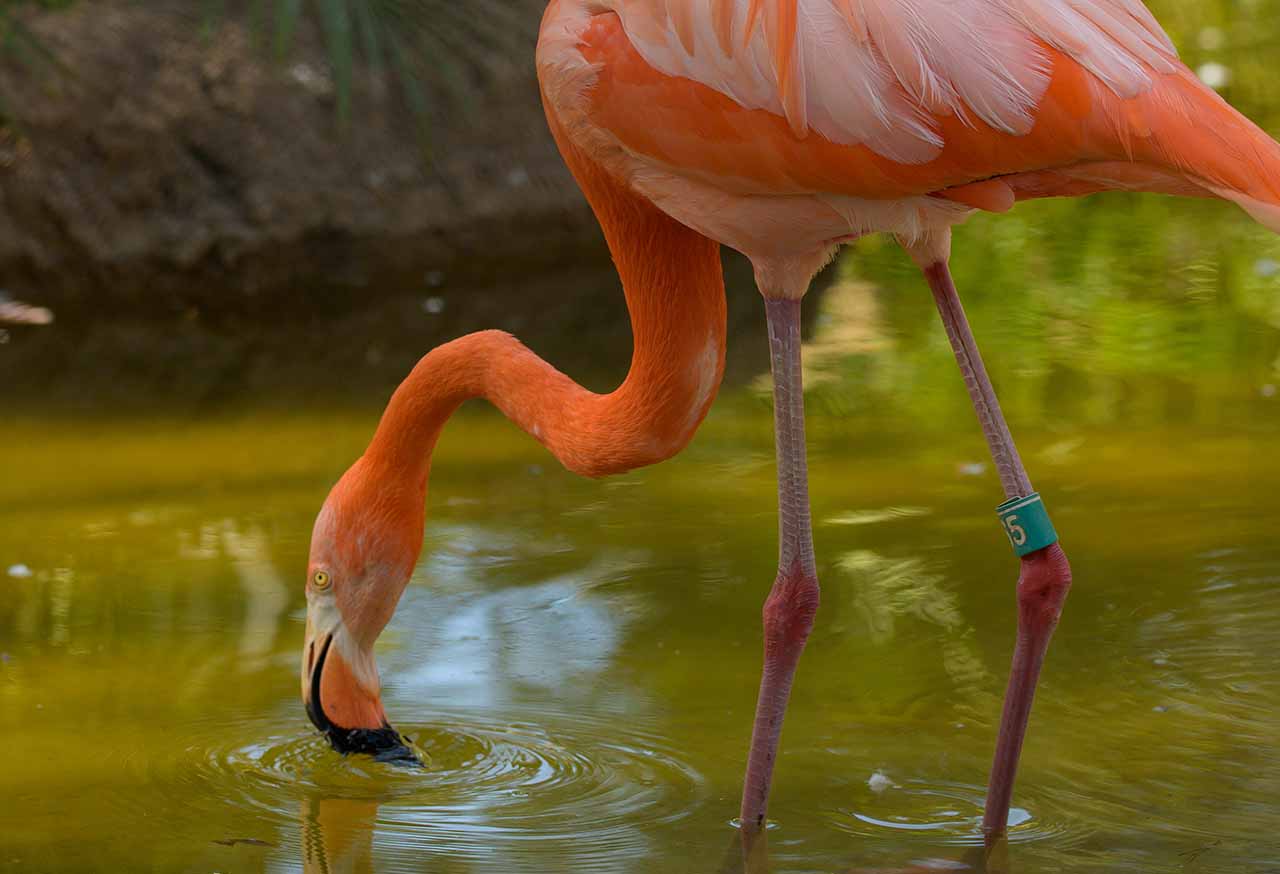
Its diet consists of algae, diatoms, crustaceans, and aquatic invertebrates. It captures food by inserting its beak upside down into shallow water and filtering it with internal structures.

Life Insurance

In the wild: About 40 years (observations in Galapagos) In captivity: Up to 60 years in controlled environments

Biology and Behavior

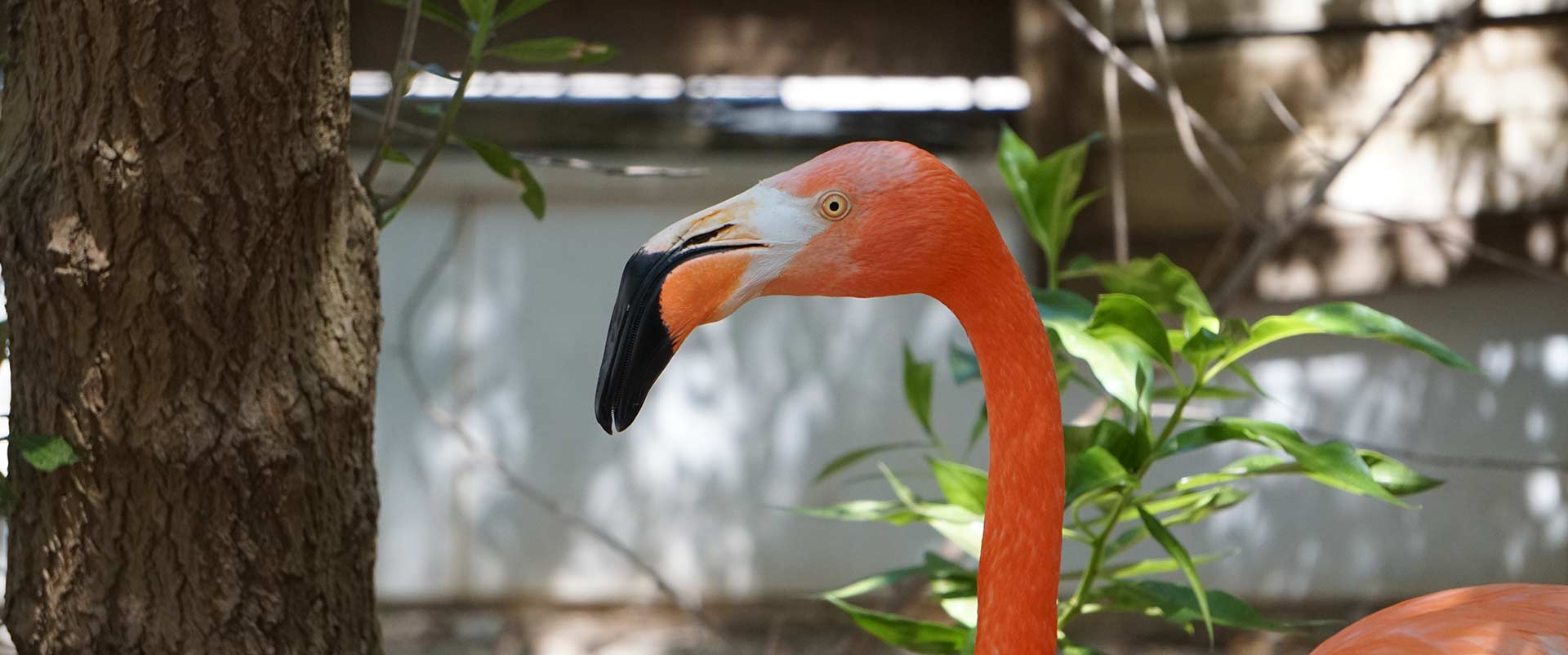
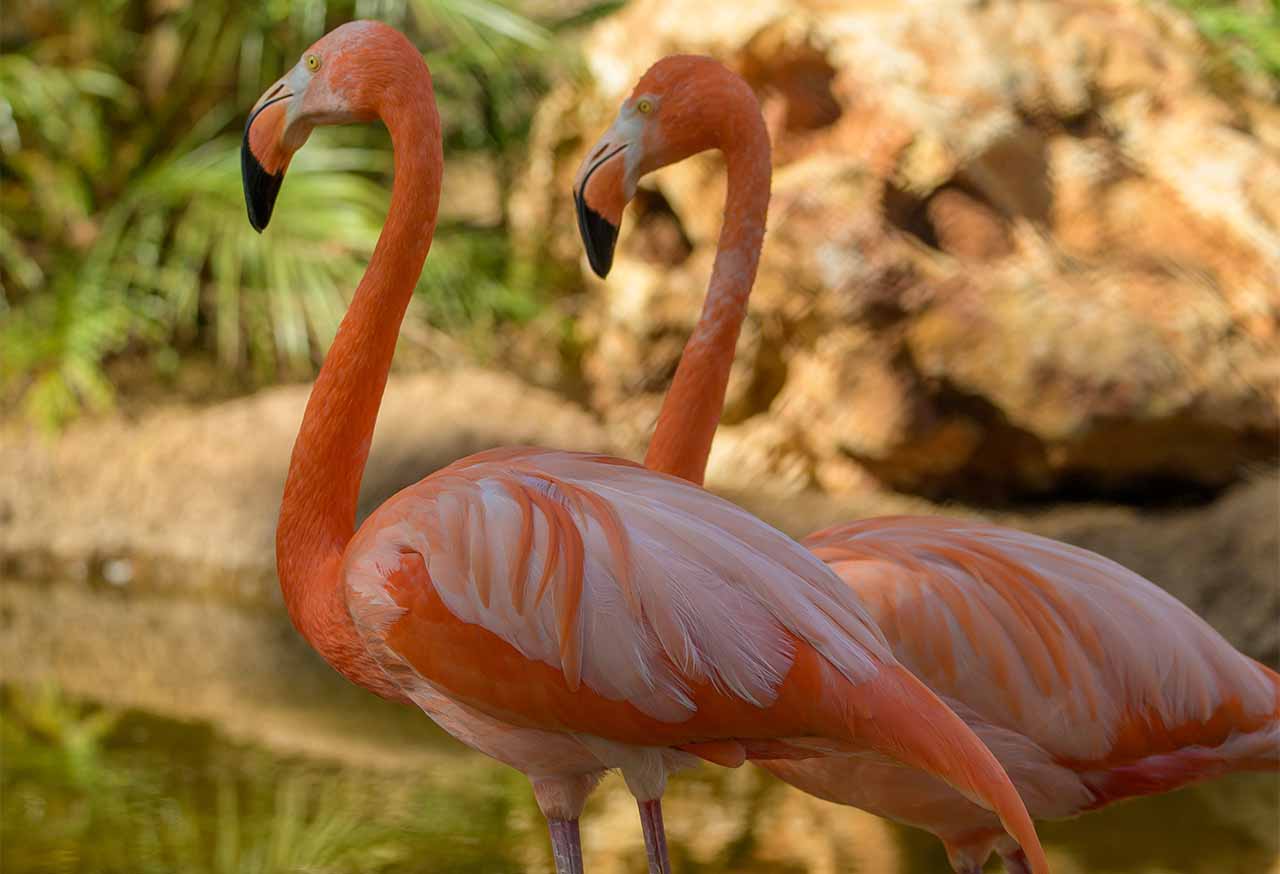
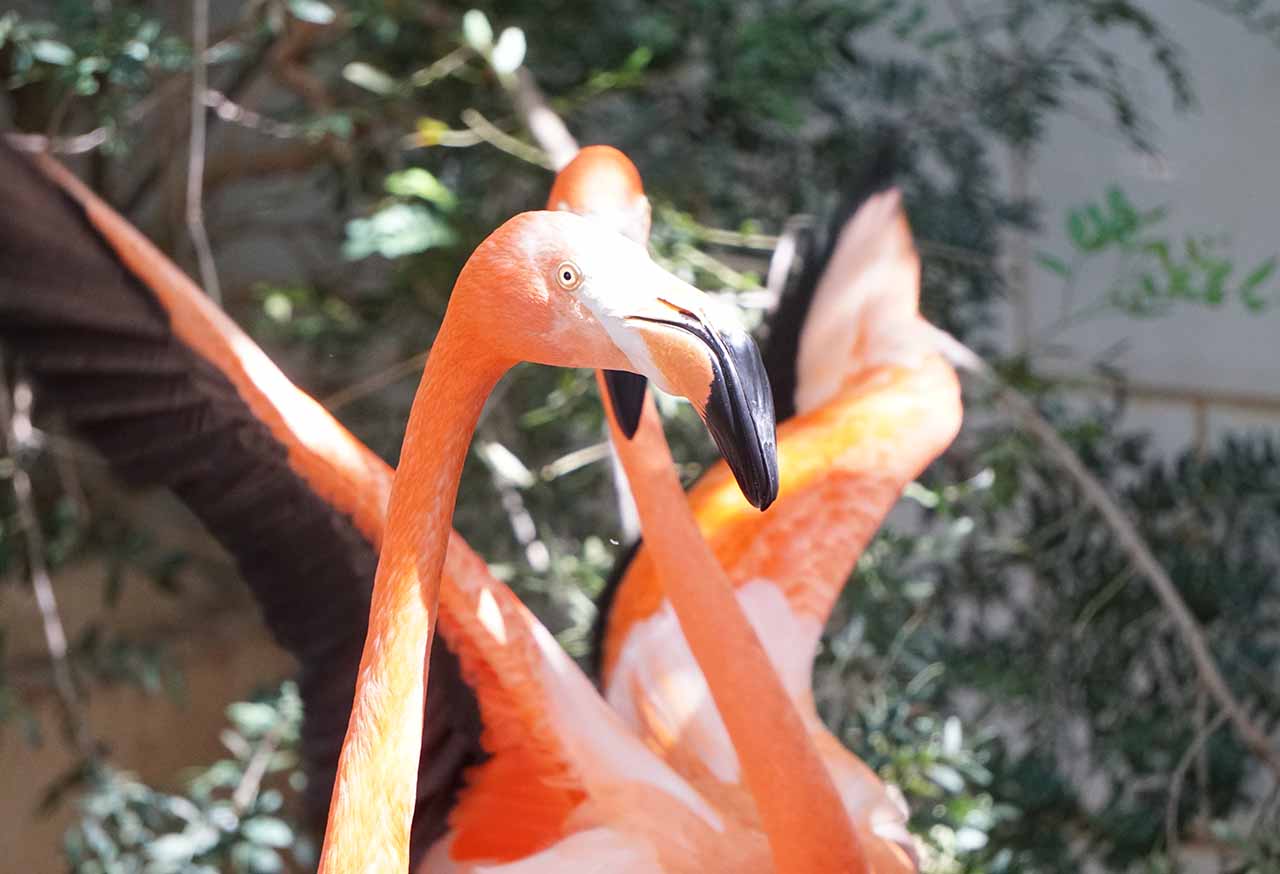
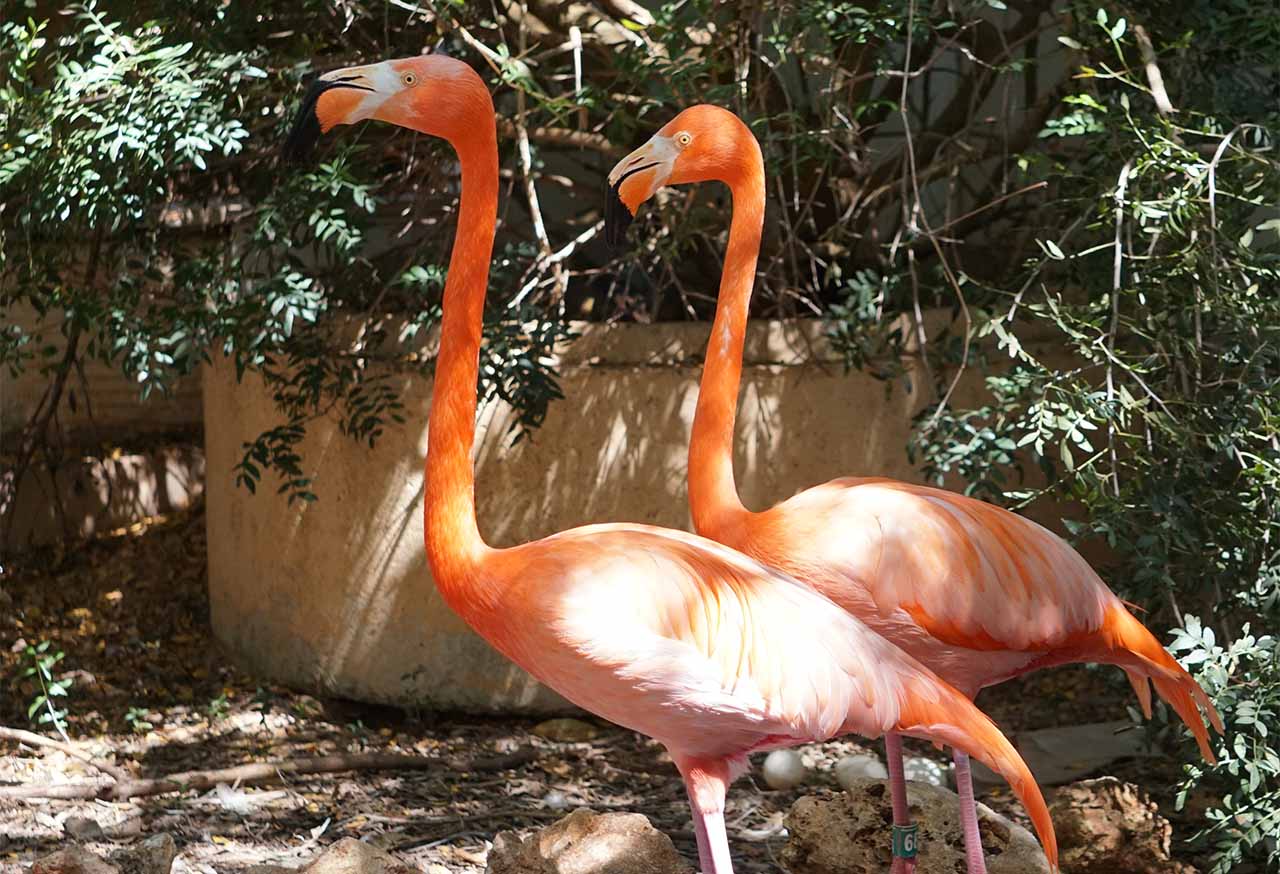
The red flamingo, also known as the Caribbean flamingo, is the most colorful species of flamingo and one of the largest in the genus Phoenicopterus. Its plumage varies from deep pink to orange-red, due to the carotenoids present in its diet, especially in crustaceans and algae. Its body is slender, with a long, flexible neck, adapted for foraging in shallow waters. The beak is curved downward, with a filtering system that allows it to separate food from water and mud. The long, slender legs are pink, adapted for walking on soft bottoms, and the partially webbed feet help it remove sediment. In flight, they display black wing feathers and a fully extended neck and legs. Their anatomy is specially adapted for aquatic life, with salt glands to excrete excess salt. Their vision and balance are highly developed, essential for resting on one leg for long periods.

The red flamingo is a highly social and gregarious species, forming colonies that can number several thousand individuals. These aggregations promote both reproduction and protection from predators. Their courtship rituals are complex and include choreographed movements of the neck, wings, and legs, performed as a group to stimulate reproductive synchronization. The species is seasonally monogamous, and both parents participate in incubation and chick care. They are diurnal, although they may make movements at dawn and dusk in search of food. They have distinctive nasal vocalizations and are very sensitive to human disturbance during the breeding season. Although they do not undertake long migrations, some populations move locally depending on rainfall, salinity, and the presence of temporary wetlands. They also exhibit frequent bathing, feather cleaning, and sun exposure to maintain their feathers in optimal condition.

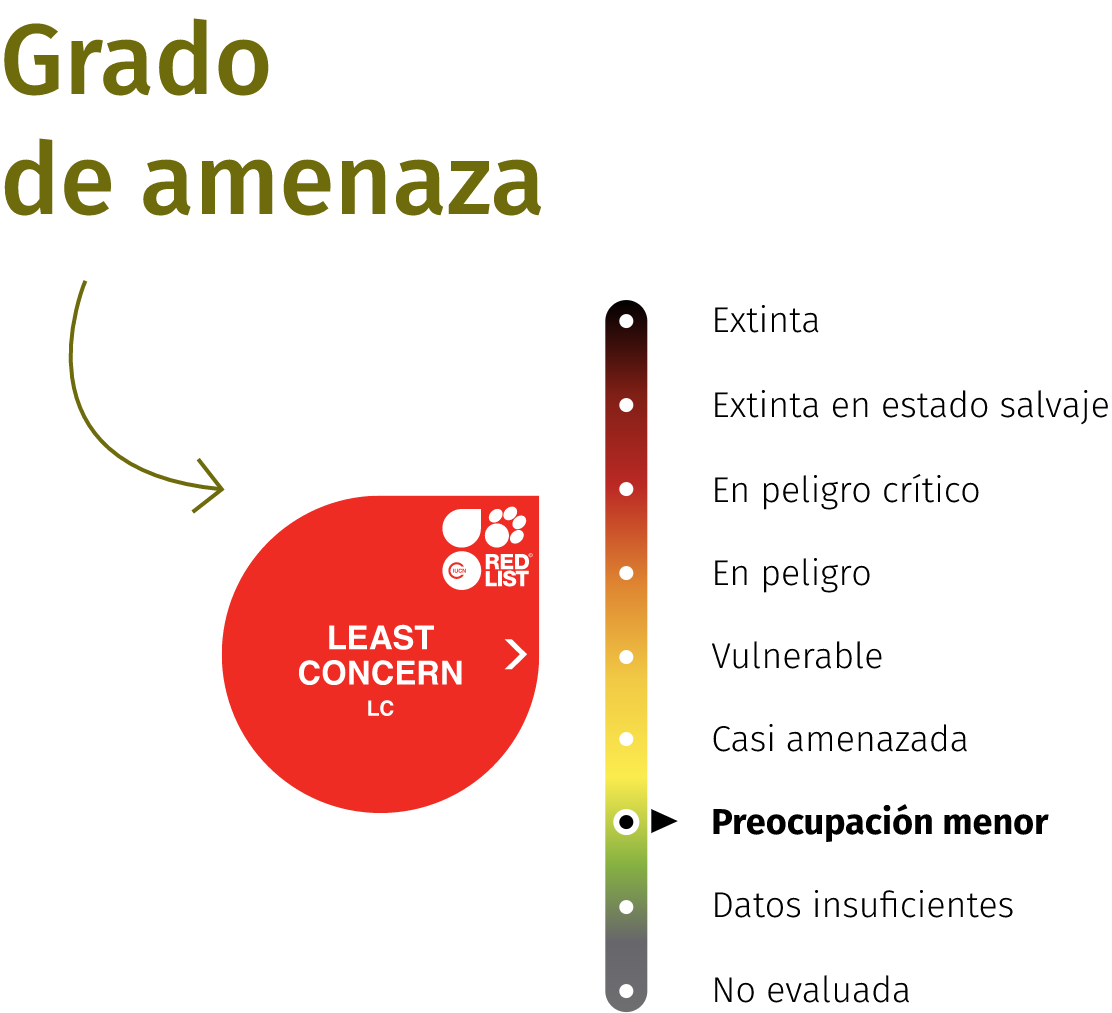
Currently classified as "Least Concern" by the IUCN, the red flamingo maintains stable but localized populations. The main threats include the degradation and loss of coastal wetlands, pollution from heavy metals and urban waste, human pressure on nesting areas, and disturbance from uncontrolled tourism. In regions such as Yucatán and the Antilles, tourism development and coastal urbanization have reduced historical breeding areas. Although there are no specific captive breeding programs, populations are successfully maintained in zoos. It is listed on CITES Appendix II, which implies control over its trade. In countries such as Cuba, Mexico, and Venezuela, nature reserves and sanctuaries have been established to protect its critical areas. Population monitoring is carried out through aerial and ground surveys, and awareness campaigns seek to reduce human disturbance and conserve the saline ecosystems that this flamingo requires to reproduce.

Some
Interesting Facts

Its scientific name, Phoenicopterus ruber, refers to its bright red color (“ruber” in Latin).

It is the flamingo with the most intense coloration, thanks to a diet rich in carotenoids present in crustaceans such as Artemia.

He can sleep standing on one leg for hours, thanks to a joint “locking” mechanism that requires no muscular effort.

Their group courtship behavior is known as “synchronized display” and is essential for triggering reproduction.

They are expert filter feeders: their beak contains comb-like laminar structures that retain microscopic particles.

At birth, the chicks are grey, and gradually develop a pink colour during the first years of life.

Both parents feed the chick a fat- and protein-rich secretion known as “crop milk,” similar to that of pigeons.

Plumage color is a good indicator of health and reproductive status: the more intense the color, the better the individual's condition.

They have a salt gland located near their nostrils, which allows them to excrete excess salt when they live in hypersaline environments.

Adults molt once a year, but never lose their ability to fly during the molt.

They can fly long distances between isolated bodies of water and reach speeds exceeding 60 km/h.

Its nest is a conical mound of mud, elevated above the water, which protects the egg from flooding and predators.

In the wild, they can live between 30 and 40 years, but in captivity, specimens have been recorded to be over 60 years old.

They are very sensitive to changes in water level: if it rises or falls suddenly, they may abandon the nest.

They communicate with a wide range of sounds, including honks, trumpets, and snorts.

They have excellent eyesight that allows them to detect food, threats, and other individuals at a distance.

Its tongue is thick and muscular, adapted to pump water into the beak during filtration.

Not all red flamingos have the same color: it depends on the diet and the subspecies (the Galapagos is paler).

Its inverted “V” flight and silhouette are unmistakable at dusk in lagoon areas.

They are a symbol of coastal biodiversity and in many Caribbean countries they represent the balance between water, sun, and life.